

More Views


Details
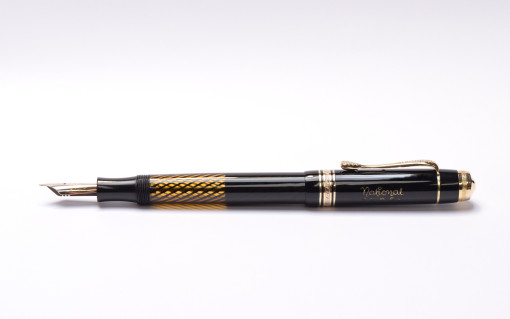
NATIONAL JUWEL 517
Manufacturer/Model: National Germany/Juwel No.517 F
Year of production: Exact year unknown, estimated mid to late 1930s
Filling system: Piston filling (Original cork replaced with x3 HQ rubber O-rings - silicone greased)
Nib: Large 14K 585 Two Tone - F Fine nib - Marked: "Warranted 14 Ct. 1St Quality" - Flexible nib, writes up to BB/3B, wet and consistent; Special Original Ebonite feed with feeding tube
Material: Cap & Barrel - celluloid. Grip section and piston shaft, Ebonite/Hard Rubber. Piston parts ebonite. Cast and Gold Filled clip, cap ring and crown
Length (pen closed): Large pen at 131mm, Posted: Oversized 167mm!
Condition and information:
*Date this pen published & listed: June 15th 2026
*This is part from the National group pen of the "Attic Find", one of approximately 20 National pens.
Context & Provenance:
To read more about the circumstances about how and where this pen was found, please visit our blog page here.
Article: "June 2nd 2021 - The 80 Year Lost, 300+ Pen Attic Find"
This find was also covered in an article by The Pelikan's Perch in the article: "Treasures In The Attic: A Time Capsule Rediscovered"
National Juwel No. 517 - F: c1930s
If someone were to dig just a little deeper into the German fountain pen manufacturing history in the 1920-1930s, this company would just pop up all over the place in ways none would expect. Company with an amazing history and heritage, and even more amazing supreme quality pens, that seems to have flown under the radar, with at least half of dozen brands, also responsible (very likely) for kickstarting the Rotring brand, possibly even other well known brands at the time.
No matter how many pens we have worked on in the last couple of decades, sometimes, seemingly out of nowhere, a pen appears that simply takes our breath away. This is one of those pens, and even though we have used this sentence before believing there is nothing else to top that up, or having seen almost everything out there, pen such as this one shows up, and we find ourselves simply astonished, yet again.
Having seen pretty much most of what was ever made, either worked on them, saw and felt on pen shows, there are still some pens that even for us, are just breaking the ordinary and making our days at the office more exciting. And this is one of those pens, so far probably the "craziest" most well engineered pen, from the Attic Find we have worked on, puting Montblanc, Pelikan and Kaweco pens, far second place to say the least.
This pen must be the epiphany of pen making in Germany in the 1930s, and we can easily count at least 3 distinct features, surely patented by National, not found in any pens from that era, and interestingly enough, amazing features not found since, either rendered obsolete by their complexity of manufacturing, or simply lost craft over the years, probably even in patent wars, but yet they are here.
The company "München Deutsche Füllhalter-werke GmbH" meaning "Munich Germany Fountain Pen Factory" was started in 1906 and manufactured pens under the brand name of Anglo-American, or sometimes shortened to "Anglo Amer". The Anglo-Amer was a very popular brand in the 1910-20. They manufactured pens both in the USA and Germany and these pens can be readily found even today on the market both in the US and Europe. The nibs were very likely manufactured in the US as the best knowhow for the fountain pen nibs was in the US, and very likely in New York or Chicago, but the pens sold both in US and Germany.
But after WWI, the Anglo-American name was not so popular in Germany, quite understandably, so somewhere around 1920 they changed the brand of the pens to "National". Under this name they produced many models, including Favorite, Knirps, Gold, Volenda, and others. Sometimes we even see these brand names on the pens, without the National brand on them, meaning sometimes a pen model line was associated with a company name, when in fact it was made by National.
While specific details about the company's history and product line are extremely limited, we managed to pull together several sources from inside our company literature and some online and just partially piece together a very complicated history of this company. One thing is sure and very evident however, that National contributed tremendously to the rich tradition of German fountain pen manufacturing during the mid-20th century. Apparently this company made those now famous Rotring Tintenkuli Rapidographs technical drawing pens, and we can even see one on their ad from 1941, The National 550, Tintenschreiber Rapidograph. Later this design was associated and was called Riepe Werke-Rotringen, and later shortened to Rotring, the needle tip pens. Apparently their Rotring brand was sold off and the company dissolved in 1945 after WWII.
From the quality and craftsmanship of the pen, we can see some telltale signs of the manufacturing processes and techniques, also found in other pen brands at the time, and its possible this company made pens for other brands, which we cannot confirm, however the quality is extremely high, on par or even surpassing Pelikan, Montblanc, Reform, Kaweco or any other German pen maker at the time. One thing is for sure, National was in the epicenter of the German pen industry, in Munich, and very likely collaborated with many companies there. Other pen brand names of this company were Favorit, Varia Füllschreiber, Volenda, Gold, Juwel, and Knirps, which some of them had either bore the name National and than the pen model such as Favorite or Knirps, or sometimes just the model as a brand, such as Juwel, Gold, Favorite or other.
From piecing all the info we have and some telltale signs such as the nib, we estimate this pen was made somewhere between 1935 and 1939.
The pen offered here however, is something else, as if National wanted to make a statement proclaiming they can make the best fountain pen in the world at that time.
The model is No. 517, and besides its unmatched craftsmanship on the surface, we find several features which we don't see on pens from this era:
- The ebonite feed is mastery in precision engineering, with a flexible metal plate like part that is inserted in the mid part, extending just 1/10 of a millimeter, just enough to touch the nib from the underside. This metal strip is connected with a channel that runs all the way up the end of the feed that enters the barrel, and we believe it helps significantly with keeping a constant uninterrupted ink-flow from the barrel to the nib.
- The feed bore connects to a very fine ink tube that runs the entire length of the barrel. This tube as found on many Parker pens from the 1950s, yes here done decades earlier, helps fill the pen from the top down as opposed to bottom down, and it provides several benefits. First there will be much less air in the chamber, as the ink will immediately start filling the barrel from the top down. Secondly it provides for a more continuous flow and a better capillary action, as it bassially extends the function of the feed, as if the feed was long as the tube and the feed combined. And finally it helps with temperature variations in the chamber and grip section, allowing for the ink temperature to more gradually and equally stabilize and equalize when the user grips the pen for writing and increases its temperature from the ambient to the temperature of the human body.
- But this raises the question, if there is a permanent ink tube running the entire length of the barrel where the piston needs to move, wouldn't this be impossible. The masterful National solution, a bore shaft inside the piston rod, where this tube goes inside when the piston is lowered! It is difficult to comprehend all of this on the 1930s pen, when only a few years earlier Pelikan launched a patented piston filling mechanism. This may have been one of those "creative" engineering solutions to find ways around that patent, but also done on the next level, much more masterful and much more engineered. Another clue is the piston shaft guide pin, rather 3 pins as opposed to a groove or a single pin which is needed to guide the piston rod.
Most amazing however is the fact that this level of precision engineering and manufacturing, done literally a century ago, still works and operates as the day it was made. The pen fills perfectly, the piston travels up and down, and the feed ink tube is still dead center-bullseye enters in that tiny bore shaft in the piston rod. It is a true pleasure to see and experience this nearly a century later, when most of today's fountain pens are simply dull in comparison in every aspect. We can see many variations of the piston filling system in the 1930s, when Pelikan was holding the patent it acquired from Theodor Kovacs. This piston filing system was so advanced that it changed the industry. So every company from Montblanc, Reform, Kaweco and others, had to have it and had to find creative ways around the patent, but still use the same principle.
In addition to the mastery of engineering, the craftsmanship of the pen is also unmatched. The pen is made in a beautiful back and amber celluloid, with an amazing and delicate helix spiral patterns that run over the entire length of the barrel, even on the black portion but they are not as visible there. How was this done, we are not entirely sure, as it seems these lines were not painted, rather they are part of the body.
Another stunning feature we are seeing for the first time is the unique turning knob blind cap which is opened on the top side as well. We are not sure as to the reason to make the blind cap open on the top as well, maybe it was just another aspect to show the craftsmanship. The turning knob is extremely large and easy to grip as it is larger as integrated turning knobs on most pens.
The pen is masterfully finished and crafted with thick 3 cap rings preventing cracks, and engraved with a precise and masterfully executed "greek key" pattern. The clip is large, cast metal and thick gold plated, finished with a nice leaf motif and engraved with the company name. There is also a strange star-like symbol under the clip, one we haven't seen before. All of this craftsmanship is topped with a beautiful insert overlay gold filled crown on top of the captop, also decorated with a nice "greek key" pattern.
In the Attic Find there were about two dozen National pens. We assume this was the prime of the company, and we can see these various models offerings at the time. Various models appealing and intended for various users, uses and styles, from large pens, Lady pens, to pocket size pens such as the Knirps, a Kaweco Sport like pen, which National made as early as 1920s in the form of a Safety pen. This tells us the company was very active and vibrant at this time, being able to produce all these models with each required different techniques, materials, nibs, machining and know-how.
Most of the National pens in the Attic Find were Favorite, which we assume was the second tear, as opposed to only a handful baring the Juwel name, which obviously stands for the top line of National, something like the Meisterstuck is to Montblanc, and the differences are visible. No coincidence then, the word Juwel is considered a "treasure" or "priceless" in German language.
All National pens, unlike a good part of the pens in the find, were fitted with their original nibs. Some, such as the 73 model, had 14K nibs, and some had steel nibs. Fortunately, same as on the Favorite pens, this pen was left to survive with its original 14K two tone nib. Yes, astonishingly then, similar to Kaweco, National was also making a two tone nibs. The nib on the pen is absolutely superb as only those old flex nibs can be. It is rated F, but by today's standards we will rate it as EF. It is flexible, but not fully flexible as this is a very thick nib and also a very large nib, size 6, comparable to MB 149 nib size. It will produce some amazing writing with amazing line variation and thanks to that rocket-science feed, have a constant and uninterrupted ink flow. Simply a joy to write with.
Another aspect that confirms the company roots and collaboration with a US nib maker, is the imprint on the nib, "Warranted 14Ct. 1St. Quality", which was a standard 14K nib imprint for many nibs made in NY and Chicago in 1920 and 1930, found even on Waterman and other brands from the USA. This would suggest that the company imported these nibs from the US to Germany in the 1930s, possibly even as late 1930s before WWII. This imprint is found on all 14K nibs on all National Pens from the find.
A pen that has left us in awe of that old craftsmanship, a mastefull execution, with a clear statement, "This is the best pen you can buy". A beautiful masterpiece pen worthy a notable place in the fountain pen history books. We will list at least one of each National pen model from the Find in order to bring back the heritage and history of this company, and contribute to the fountain pen history as much as we can.
Some of our Sources:
http://www.collectiblestars.de/Angloamer.html
https://plumaemocion.com/plumas/1039
https://www.youtube.com/watch?v=liGvKZMnbA0
This item is covered by our 1 Year Full International Warranty at no additional cost. The terms of our Warranty are very simple, meant to give you a secure and trouble-free buying experience.
-
New Schneider GREEN 6 Pack Ink Cartridges Standard International Size Made in Germany (Fit Most Vintage/New Fountain Pens)
Regular Price: $2.89
Special Price $2.31
-
NOS Special CROSS Black Noir Negro Archival ISO Standard Bottled 2 fl. oz. | 62.5ml Fountain / Dip Pen Ink in Glass Bottle
Regular Price: $26.99
Special Price $21.59
-
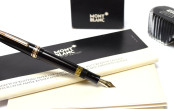
Original Genuine Vintage 1990s Montblanc 10 Sheets Of Blotting Paper For Fountain Pens/Ink "Limited Edition 4810" Creation / Création Lalique La Lique Set Blotter Art. No. 28510
Regular Price: $99.99
Special Price $79.99
-
Original Genuine Montblanc Pix Pack of 10 HB Pencil Refills Leads 0.5mm Art. No. 16400 Made in Germany
Regular Price: $9.99
Special Price $7.99
- More Ink & Refills ...
-
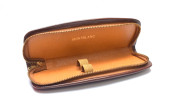
Vintage 1950s High Quality Montblanc Light Brown and Ochre Soft & Thick Genuine Leather Zipper Pouch Holder For 2 Pens
Regular Price: $159.99
Special Price $127.99
-
Pack of 5 ProtoPens Vintage Style Safe Keeping Storage Shipping and Organizing Fountain Ballpoint Pencil Pen Case Box
Regular Price: $9.99
Special Price $7.99
- More Cases ...
This item is located in Europe and ships Worldwide.
At checkout you can choose between two shipping options:
$14.95 Regular Postal Service, Priority & Registered Airmail - Limited Tracking 1-4 WEEKS Delivery
$54.95 DHL Express International - Accurate Tracking 1-4 DAYS Delivery Worldwide
Learn more about these shipping options.
Prior shipping our items have to pass our highest quality control inspection, are perfectly cleaned and tested by ProtoPens pen staff after which are carefully packed. If the pen does not come in its original manufacturers box, it is packed in a special ProtoPens case.
RETURS: Returns are accepted. You are welcome to ship the item back to us within 7 days after receiving it in the same condition it was delivered to you and we will issue you a full refund! Learn more...
(NOTE: If you don’t receive an email from us soon, please check your email spam folder)